

Are there any risks associated with the use of hyaluronic acid?
Hyaluronic acid, a molecule with multiple benefits
Discovered in 1934 in the vitreous humor (gelatinous fluid in the posterior part of the eye) of a bovine, hyaluronic acid is a molecule naturally present in the body, contributing to skin elasticity.
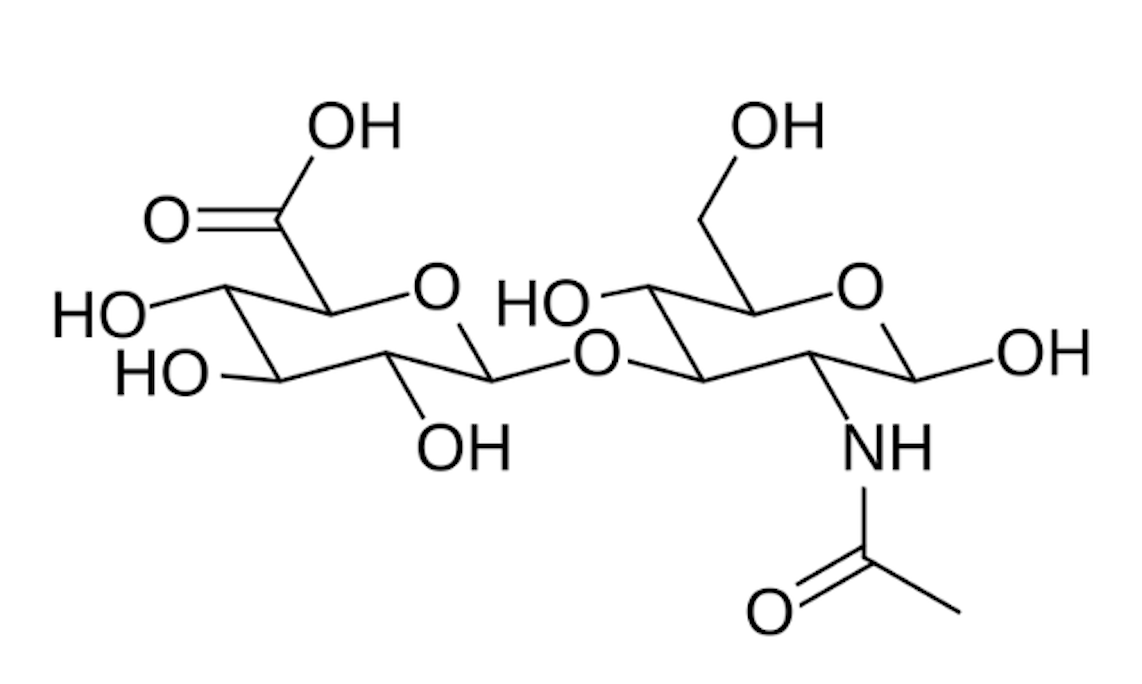
In our body, hyaluronic acid is produced by fibroblasts in the skin, and by chondrocytes in the cartilage.
There are different forms of hyaluronic acid. The different forms of hyaluronic acid have been the subject of another article on our blog.
The water retention capacity of the hyaluronic acid molecule acts to maintain skin hydration. Furthermore, hyaluronic acid is also involved in inflammatory and healing processes.
However, the body's production of hyaluronic acid decreases over time. Age and UV rays are factors responsible for this decrease. It is therefore advisable to supplement with Hyaluronic Acid. But does supplementing with Hyaluronic Acid present a risk?
Does hyaluronic acid supplementation pose a risk?
Regardless of its weight, hyaluronic acid is a molecule well tolerated by all skin types when used topically (on the skin's surface) for the simple reason that hyaluronic acid is a molecule naturally present in the body, so there is no possible allergy to the Hyaluronic Acid molecule itself.
Hyaluronic Acid is therefore not a sensitizing or allergenic molecule. It has no undesirable side effects in cosmetics.
Furthermore, food supplements containing hyaluronic acid are also free from the risk of overdose or reaction to the Hyaluronic Acid molecule. However, as it is mixed with other active ingredients and excipients, there may be a hypersensitivity to a hyaluronic acid-based food supplement, but this cannot be attributed to the Hyaluronic Acid itself (but rather to the coating).
The same principle applies to hyaluronic acid presented in the form of injections as part of aesthetic medicine procedures.
The risk with hyaluronic acid injections lies in the act itself and not in the main material (Hyaluronic Acid).
Poorly executed hyaluronic acid injections can present a risk, ranging from a simple "miss" with an unsightly result to more serious consequences that can lead to necrosis or embolisms. Only doctors trained in the practice or aesthetic surgeons are authorized to perform injections, as this type of procedure requires precise knowledge of anatomy and expertise in the field, in order to avoid any injection errors.
In summary, it is not the hyaluronic acid molecule itself that presents a risk, but the technique, the injection area, or the secondary excipients.


