

Autumn: How to prevent hair loss?
Hair loss supplements: Myth or reality?
In autumn, trees lose their leaves and we... our hair! But don't panic, this phenomenon, called seasonal shedding, is completely normal.
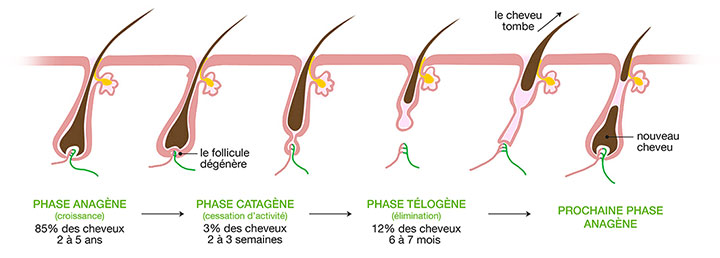
During the year, we lose an average of 50 to 100 hairs per day. While this may seem like a lot, it is actually quite harmless and part of the hair's life cycle. The hair life cycle is divided into 3 stages.
Hair life cycle:
The anagen phase (the longest) is the phase during which the hair grows. This stage can last several years and is generally longer in women than in men.
Then comes the catagen phase. During the catagen phase, hair stops growing; it is said to be at rest. The hair bulb shrinks, which breaks communication with the blood system and ends the hair's life cycle.
Finally, the telogen phase represents the period of hair shedding. Under the action of external aggressions such as brushing or friction and the pressure of the new hair follicle forming, the hair naturally falls out.
However, several factors can accelerate hair loss. While pregnancy or psychological factors such as stress or anxiety can cause shedding, the phenomenon of seasonal shedding is also responsible for a more significant hair loss process.
Seasonal hair loss
Hair falls out all year round, but during autumn, its shedding can be 2 to 4 times greater. This follows the summer period, when hair is much more exposed to sunlight. Indeed, light stimulates the adrenal glands and thus the production of male hormones, which are responsible for more significant hair loss.
On the other hand, seawater and pool chlorine will weaken the hair and accelerate its shedding.
Although the phenomenon of seasonal hair loss is temporary, it can represent a real problem if the regrowth phase that follows is weak. Hair can regrow thinner and less dense.
Hair loss: Aggravating factors
Diet: Consequences for hair vitality?
Certain vitamins and minerals are essential for hair growth and vitality, such as B vitamins, zinc, silicon, omega-3s, and iron. A deficiency can accelerate hair loss.
Stress and fatigue: Impact on hair density?
Stress and fatigue are two factors that can lead to impressive hair loss, known as reactive hair loss.
Hormones: Occasional hair loss factor?
Finally, it is common to notice significant hair loss during menstruation, menopause, or postpartum periods.
How to remedy hair loss?
Whatever its nature, hair loss cannot be avoided, as it is part of the normal hair life cycle. However, there are several ways to limit excessive loss of hair density.
Firstly, it is essential to have a varied diet. Certain foods naturally rich in plant proteins, iron, and zinc are known for their properties promoting hair growth. Thus, chickpeas, lentils, and dried beans are to be preferred.
Secondly, vegetables rich in vitamins and minerals such as carrots, spinach, or peppers are also recommended for hair growth and vitality.
Finally, to compensate for possible deficiencies, it is advisable to supplement daily intake with hair supplements.
But which nutrients should you prioritize? How often? Here's how to choose.
The role of food supplements in preventing hair loss
Food supplements provide an intake of nutrients (vitamins, minerals, and other substances that can be beneficial for health). Some food supplements are specially formulated to help prevent hair loss or promote hair regrowth. Here are some nutrients commonly associated with hair health and found in food supplements:
Biotin (vitamin B7): Biotin is essential for healthy hair, skin, and nails. A biotin deficiency can lead to hair loss.
Vitamin D: Vitamin D deficiency has been linked to hair loss. It is essential to ensure sufficient supplementation, especially in individuals deficient in vitamin D.
Iron: Iron deficiency is linked to hair loss. Iron supplements can be beneficial for those with a deficiency.
Zinc: Zinc is essential for hair growth, and its deficiency can contribute to hair loss. Zinc supplements can help in some cases.
Proteins: Proteins are the basis of keratin, which makes up hair. Insufficient protein intake can lead to hair loss.
Essential fatty acids: Omega-3 and omega-6 fatty acids are important for hair health. Supplements of fish oils or vegetable oils rich in these fatty acids are recommended.
Hair Booster, the ideal hair supplement?
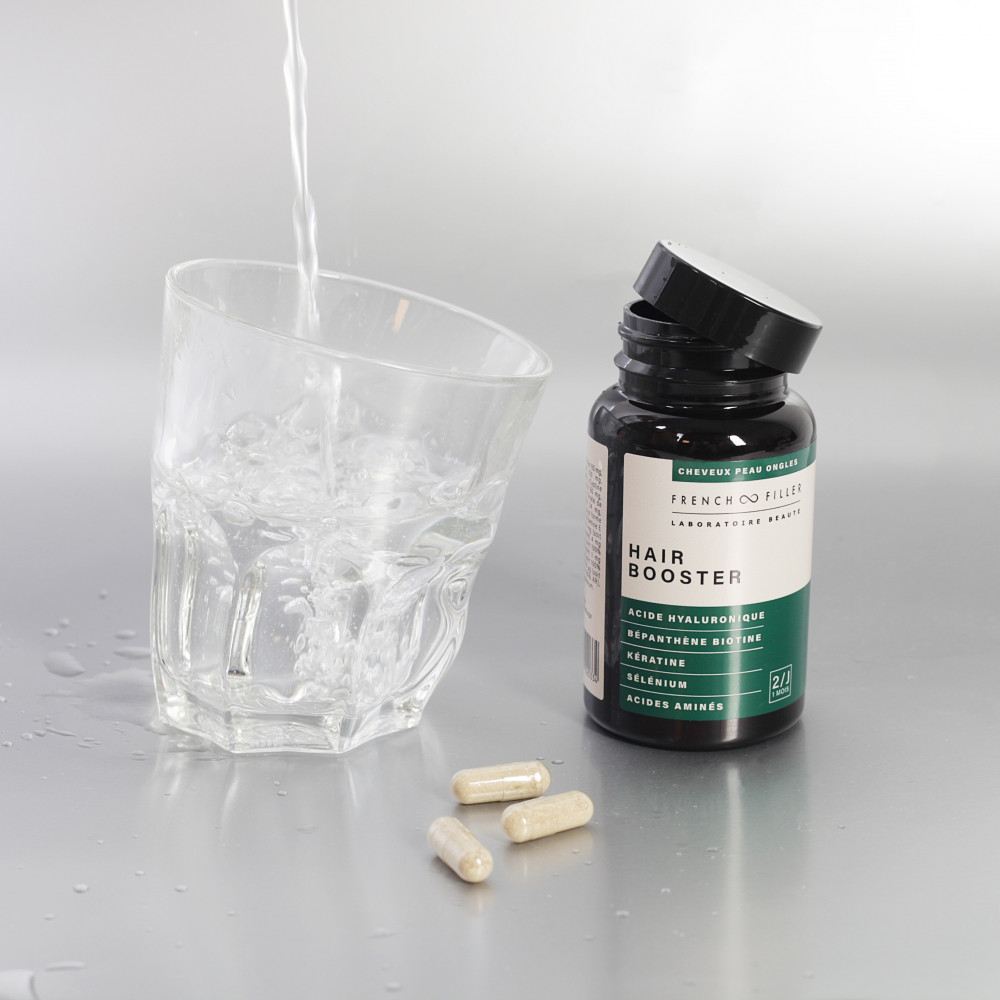
The Hair Booster is a hair supplement rich in benefits, perfectly formulated and dosed to provide all the necessary nutrients to promote hair growth and give it strength and shine. Hair Booster is a food supplement to be taken in capsule form (2 capsules/day with meals). For optimal effectiveness, it is recommended to take a course of at least 3 months.
It strengthens and promotes the growth of adnexa (skin, nails, and hair), helps regulate sebum production while maintaining good hydration levels of the dermis, and contributes to maintaining the elasticity of the skin and hair.
Hair Booster is enriched with Hyaluronic Acid, a molecule that helps prevent hair breakage and limit split ends. Hyaluronic Acid deeply moisturizes the hair fiber and repairs damaged hair.
Formulated by doctors of pharmacy, the Hair Booster is made in France.
Shop your Hair Booster here! HAIR BOOSTER - HAIR
In addition to the Hair Booster treatment, it is advisable to massage the scalp with each shampoo.
Scalp massage stimulates microcirculation, and thus hair growth.
The use of a silicone-bristled brush is recommended, as the soft bristles stimulate the scalp during massage and increase microcirculation, allowing for better tissue oxygenation.
Shop your exfoliating scalp massage brush here! EXFOLIATING STIMULATING SCALP BRUSH


